
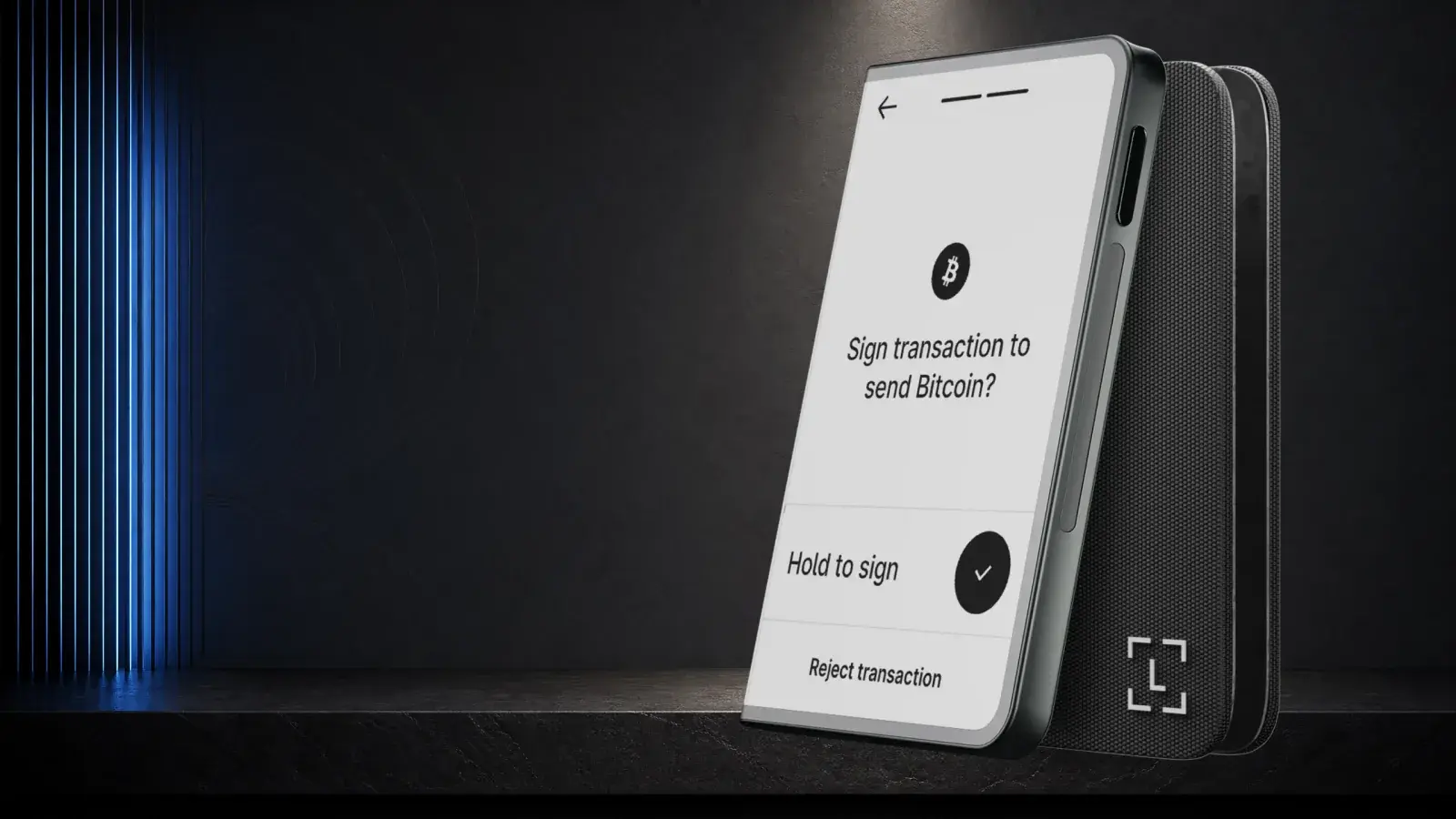
Bottom line: Ledger Stax is the hardware wallet for someone who already understands that it is poor value and wants it anyway. The curved 3.7-inch E Ink display, credit-card proportions and industrial design make every cheaper signer feel unfinished. Yet Stax protects keys with essentially the same Secure Element architecture as Ledger Flex and Nano Gen5. The US$399 price buys a beautiful interface, magnets and Qi charging, not a higher tier of custody security.
For a broader price and security comparison, see our hardware wallet guide and hot vs cold wallet explainer.
Most hardware wallets look like USB sticks, key fobs or miniature calculators. Ledger Stax looks like a product designer was finally allowed into the room.
Ledger developed it with Tony Fadell, best known for the iPod, and announced it in 2022. Manufacturing the curved E Ink display took much longer than expected; first customer shipments began on May 27, 2024. The finished device is unusually thin, pleasant to hold and instantly recognizable. It is also Ledger’s most expensive wallet at US$399.
That creates a simple review question: does using a lovely hardware wallet improve security enough to justify more than double the price of Nano Gen5?
For most people, no. For a smaller group that signs frequently and values physical design, Stax is the only wallet in this category that feels like an object rather than equipment.
Review methodology: Boxmining assessed the current shipping specifications, Ledger software and security documentation, plus Stax’s position against the complete 2026 Ledger range. We are not claiming a new multi-month battery test or physical penetration test. Price and support were checked on August 10, 2026.
Ledger Stax specifications
| Feature | Ledger Stax |
|---|---|
| List price | US$399 |
| Display | 3.7-inch curved E Ink touchscreen, 16 grayscale levels; 400 × 670 pixels |
| Security | ST33K1M5 Secure Element, CC EAL6+, Ledger OS |
| Connectivity | USB-C, Bluetooth 5.2, NFC |
| Charging | USB-C and Qi wireless charging |
| Size | 85 × 54 × 6 mm |
| Weight | 44.2 g |
| Materials | Aluminium and plastic |
| Direct asset support | 500+ through Ledger Wallet |
| Wider support | Thousands through compatible third-party wallets |
| Included accessories | Magnet Shell, Ledger Recovery Key and recovery sheets |
The specifications come from Ledger’s current Stax product page. It supports recent Windows, macOS, Ubuntu, iOS and Android releases, but not Chromebooks.
The curved screen is the product
Stax wraps its E Ink display around one long edge. The spine can show the device name or an identifying image, useful if several units are stacked together using their built-in magnets. The front has enough room to present transaction steps without the claustrophobia of an old two-button Nano.
The display is monochrome and refreshes like an e-reader. It does not deliver phone-like animation, and the personalized lock screen remains visible even when Stax is off because E Ink retains an image without constant power. Ledger markets NFTs heavily here, but displaying grayscale art on a locked wallet is decoration, not custody.
The meaningful security benefit is readability. Hardware wallets ask the user to compare addresses, amounts, networks and permissions against their intent. A bigger screen reduces scrolling and makes it harder to excuse skipping that work. Ledger’s Clear Signing can translate supported contract data into readable actions, while Transaction Check can simulate certain EVM transactions and warn about dangerous outcomes.
Neither feature makes blind signing safe. If Stax shows an opaque hash or unfamiliar approval, its gorgeous display is faithfully telling you that you do not know what you are signing.
Design and daily use
At 6 mm thick and 44.2 g, Stax is thinner and lighter than Flex. The curved aluminium shell feels deliberate, and the included Magnet Shell protects the face. Multiple Stax devices snap into a tidy stack, though this is more useful to a professional managing separate wallets than a normal holder.
Touch controls make PIN entry, account navigation and transaction review more natural than a two-button wallet. The larger glass surface is also a single point of interaction: a serious crack or failed touch layer can make the unit unusable. Your assets remain recoverable from the backup, but the physical device may become an elegant paperweight.
Qi charging is exclusive to Stax within Ledger’s current line. Set it on a compatible pad, or use USB-C. Wireless charging feels appropriate on a product designed to eliminate cable friction, but it is a comfort feature. It neither improves signing security nor solves the need for USB-C during some troubleshooting and firmware workflows.
Bluetooth matters more. Stax signs through supported iPhone and Android workflows without exposing private keys to the phone. Each transaction still requires confirmation on the trusted display. Users who do not want wireless interfaces can disable Bluetooth and operate over USB-C.
Security: same strong Ledger foundation
Stax uses Ledger’s ST33K1M5 Secure Element, certified to CC EAL6+, to generate, store and use private keys. Ledger OS isolates applications, and the trusted display lets the Secure Element present the transaction being authorized. The company’s Donjon security team attacks Ledger products internally and publishes research against the wider hardware market.
This is a serious commercial security platform. It is also not fully open source. Important parts of the Secure Element integration and operating system cannot be independently inspected or reproduced in the way open-hardware advocates prefer. Buying Stax means accepting Ledger’s closed core, supply chain and update process in return for its certifications, testing resources and broad ecosystem.
The curved screen, magnets and wireless charger do not change that model. They make security more pleasant to operate. They do not make the seed phrase more resistant to a fake support agent.
Use the same disciplines required by any hardware wallet:
- Initialize Stax yourself and reject any package containing pre-filled recovery words.
- Verify the destination, amount, network and approval details on the Stax screen.
- Never enter the recovery phrase into a website, computer or phone.
- Keep device, Recovery Key and phrase backup in separate secure locations.
- Use a passphrase only if you understand that forgetting it creates a valid but empty wallet.
Ledger Recovery Key and recovery planning
Stax now includes Ledger Recovery Key, a PIN-protected NFC card containing an encrypted local backup. Tapping it to a compatible Ledger can simplify recovery. It is separate from Ledger Recover, the optional identity-based subscription service.
The card is useful for households where accurately preserving 24 words is the weakest link. It should not become the only plan. A standard recovery phrase is interoperable with compatible wallets and does not depend on NFC hardware. We would keep both, stored apart, and perform a recovery test before moving serious funds.
The magnets do not damage the stored private keys. They do create an obvious temptation to keep several wallets together. Separate wallets only improve resilience if their backups and physical storage do not share the same failure point.
Coin support and the Ledger ecosystem
Ledger Wallet manages more than 500 assets directly, while compatible wallets extend Stax to thousands of coins and tokens. Bitcoin, Ethereum, Solana and many established networks are straightforward; niche networks or advanced functions may require a third-party interface. Use Ledger’s asset directory to check the exact combination.
Ledger Wallet can prepare sends and receives, install device apps, display portfolios and connect users to third-party buying, swapping and staking services. Those commercial integrations are convenient but separate from cold storage. They can carry spreads, fees, account requirements and jurisdictional restrictions. Stax protects the signature; it does not turn a swap provider into a decentralized service.
For DeFi, Stax often acts as the secure signer behind MetaMask, Rabby or another chain-specific wallet. The browser wallet can still present malicious information. The final device screen is the authority. When the screen cannot express the action clearly, the appropriate response is investigation, not optimism.
Ledger Stax vs Flex vs Nano Gen5
| Device | Price | Display and build | Who it suits |
|---|---|---|---|
| Ledger Nano Gen5 | US$179 | 2.8-inch flat E Ink; plastic body | Buyers who want current Ledger features at the lowest price |
| Ledger Flex | US$249 | 2.84-inch flat E Ink; Gorilla Glass and aluminium frame | Most premium-wallet buyers |
| Ledger Stax | US$399 | 3.7-inch curved E Ink; 6 mm body; Qi and magnets | Design enthusiasts and frequent signers unconcerned by price |
All three use Ledger’s ST33K1M5 Secure Element and support USB-C, Bluetooth and NFC. The expensive model does not get a secret second vault.
Nano Gen5 is the value choice. Flex adds better materials and lands at a reasonable premium. Stax costs another US$150 for a larger curved screen, remarkable thinness, magnets and Qi charging. Those features are real and executed well. They are simply luxuries.
Trezor Safe 7 competes at US$249 with a 2.5-inch colour touchscreen, Bluetooth, USB-C and Qi2. It has an open-source architecture and a dual-Secure-Element design, but its TROPIC01 chip has a disclosed physical fault-injection weakness. Trezor’s layered architecture prevents the published attack from reaching funds, PINs or backups, yet the chip flaw cannot be completely repaired in existing hardware. Stax’s security stack is older and less open, but more mature.
Who should buy Ledger Stax?
Buy Ledger Stax if:
- You sign often enough that display quality is part of your security routine.
- You want the thinnest and most distinctive mainstream hardware wallet.
- Qi charging, iPhone support and a polished ecosystem matter.
- US$399 is comfortably within the security budget after backups and physical storage.
Skip Ledger Stax if:
- You are looking for the greatest security per dollar.
- The wallet will spend almost all its time in a safe.
- You require fully open-source firmware and hardware designs.
- Flex already provides every interaction you need.
Verdict
Ledger Stax is simultaneously over-engineered and easy to understand. It makes the trusted display, the part of a hardware wallet users actually negotiate with, larger and more pleasant to use. That can encourage better transaction verification, which has genuine security value.
The value stops before US$399. Nano Gen5 signs with the same fundamental chip architecture for US$220 less. Flex provides most of the premium experience for US$150 less. A metal backup, a second signer in another location or a multisig setup may do more for actual resilience than the difference between Flex and Stax.
So Stax is not our default recommendation. It is the best-designed Ledger and the least rational Ledger purchase. If that sentence makes you want it more, you are probably its intended customer.
Frequently asked questions
Is Ledger Stax safer than Ledger Flex?
Not fundamentally. Both use the ST33K1M5 Secure Element, CC EAL6+ certification and Ledger OS. Stax’s larger screen can make verification easier, while its physical design adds comfort. The private-key architecture is not a higher security tier.
Can Ledger Stax charge wirelessly?
Yes. Stax supports Qi wireless charging as well as USB-C. Ledger Flex and Nano Gen5 charge through USB-C.
Why did Ledger Stax ship late?
Ledger announced Stax in 2022 and began shipping to initial customers in May 2024. Producing the curved E Ink display at scale caused a long delay. Current buyers are purchasing a shipping retail product, not joining the original preorder queue.
Do I need several Stax devices because they stack?
No. The magnets are an organizational feature. Multiple devices can support separate accounts or a more sophisticated custody scheme, but simply stacking wallets together does not create multisig or improve backup resilience.
Share
Found this useful?
Share it with someone who'd want to read it.
Related
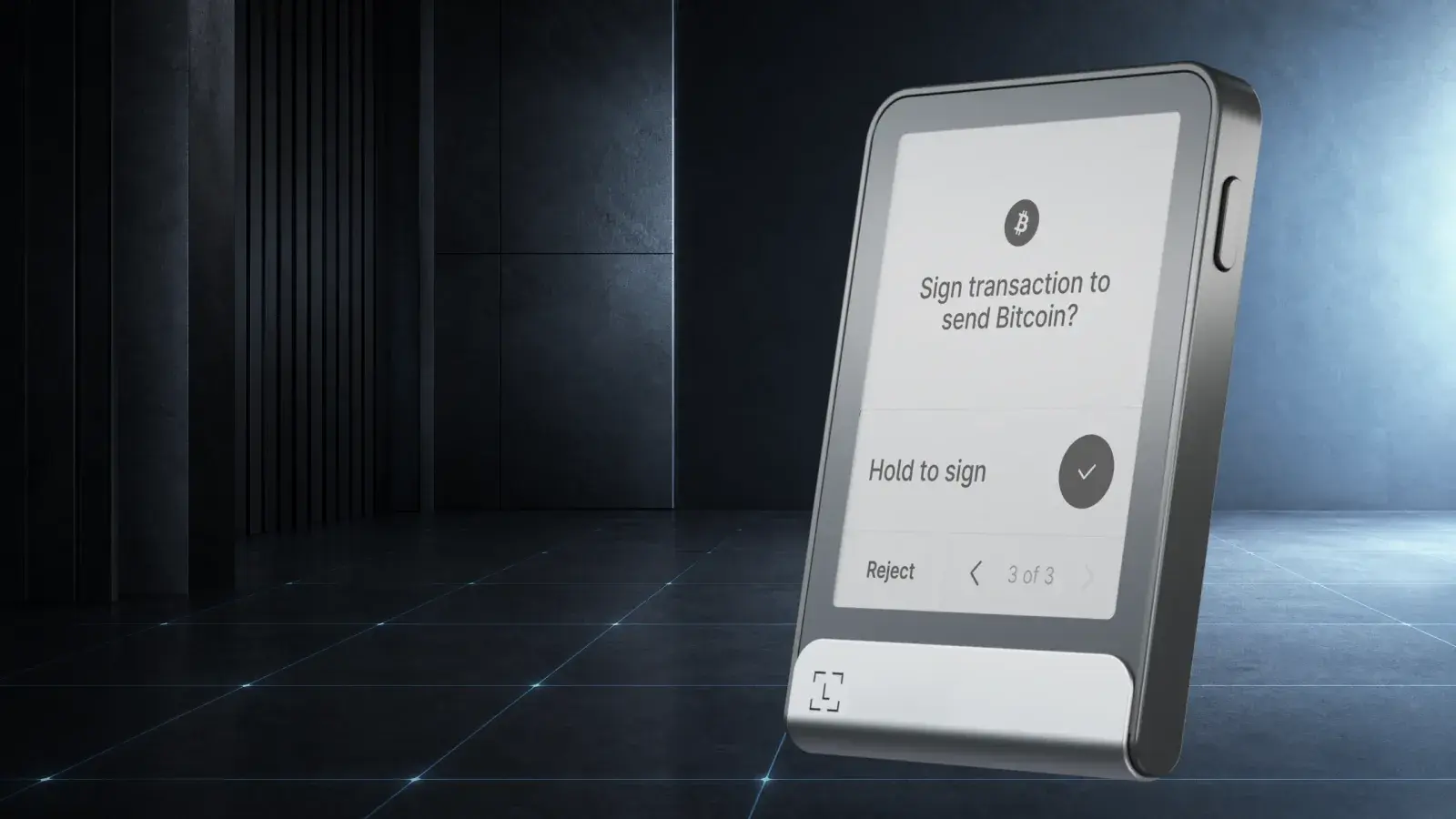
Ledger Flex Review (2026): Is the US$249 Wallet Worth It?
Ledger Flex offers a 2.84-inch E Ink touchscreen for US$249. It suits buyers wanting a premium Ledger without paying US$399 for Stax.
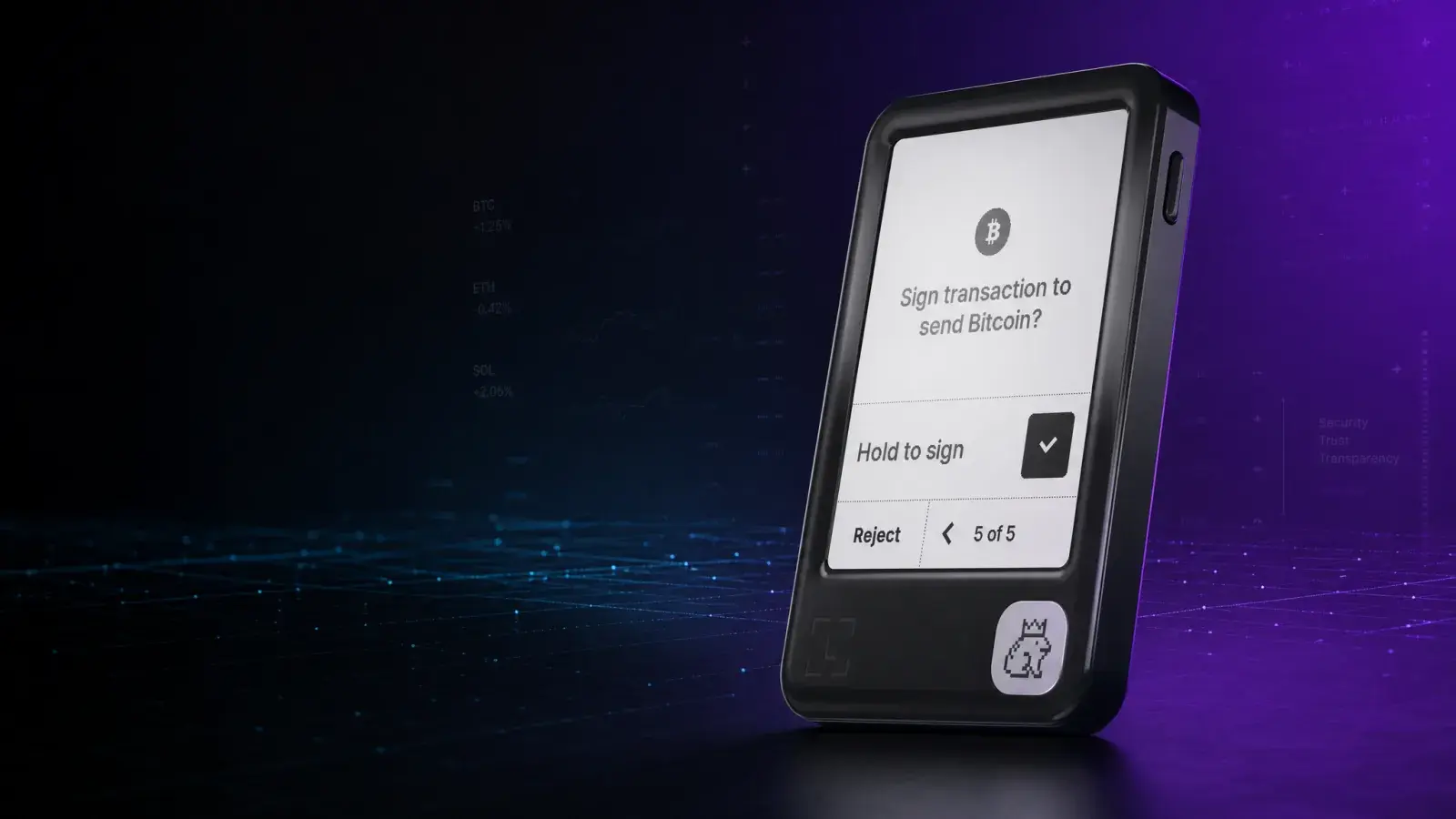
Ledger Nano Gen5 Review (2026): Best Ledger for Most?
Ledger Nano Gen5 adds an E Ink touchscreen, Bluetooth and Clear Signing for US$179. It is the practical Ledger for regular mobile crypto users.
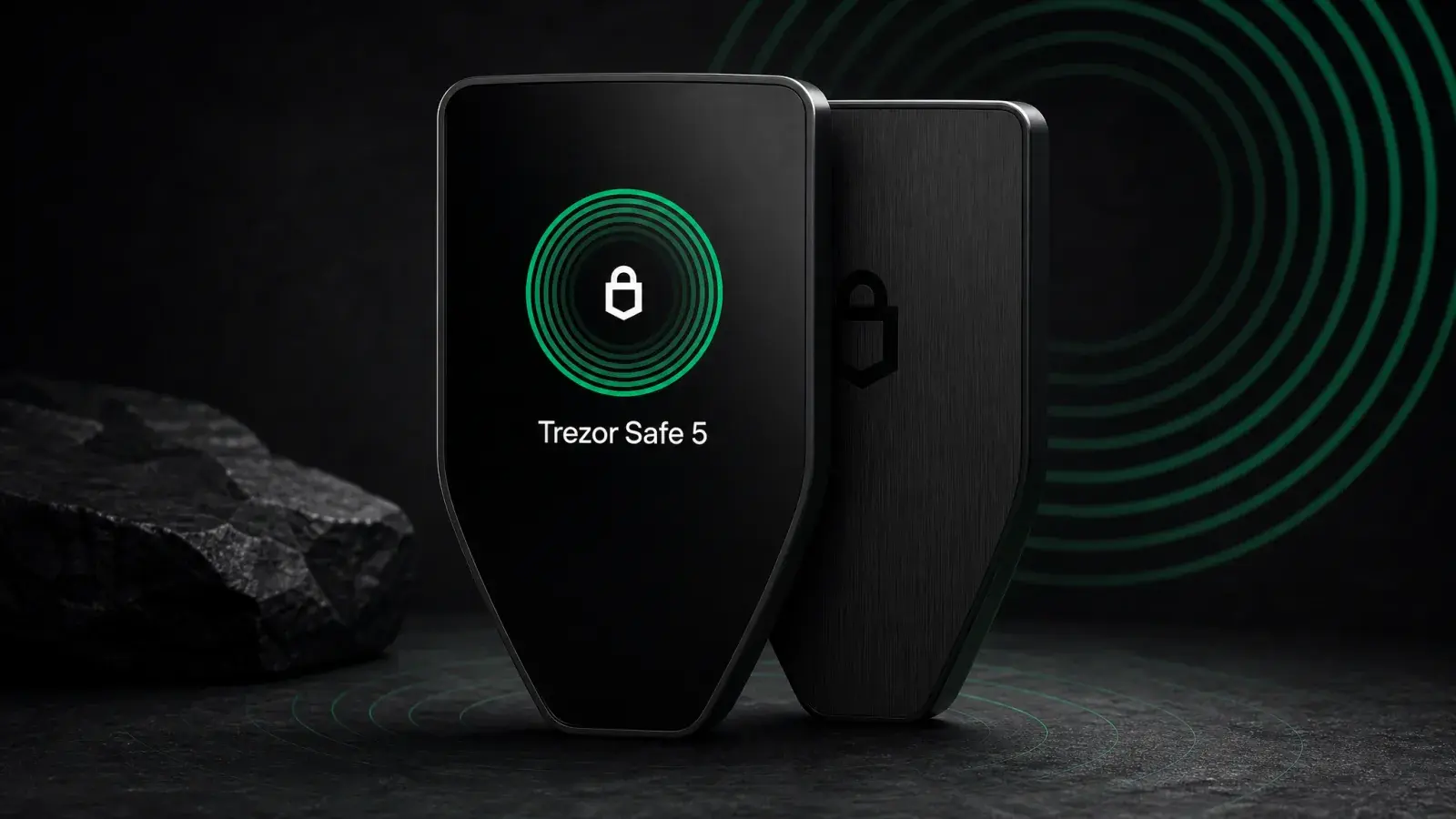
Trezor Safe 5 Review (2026): Best-Balanced Trezor
Trezor Safe 5 adds a touchscreen and haptics to open-source EAL6+ security for US$169. It is the best-balanced Trezor for regular USB-C use.