
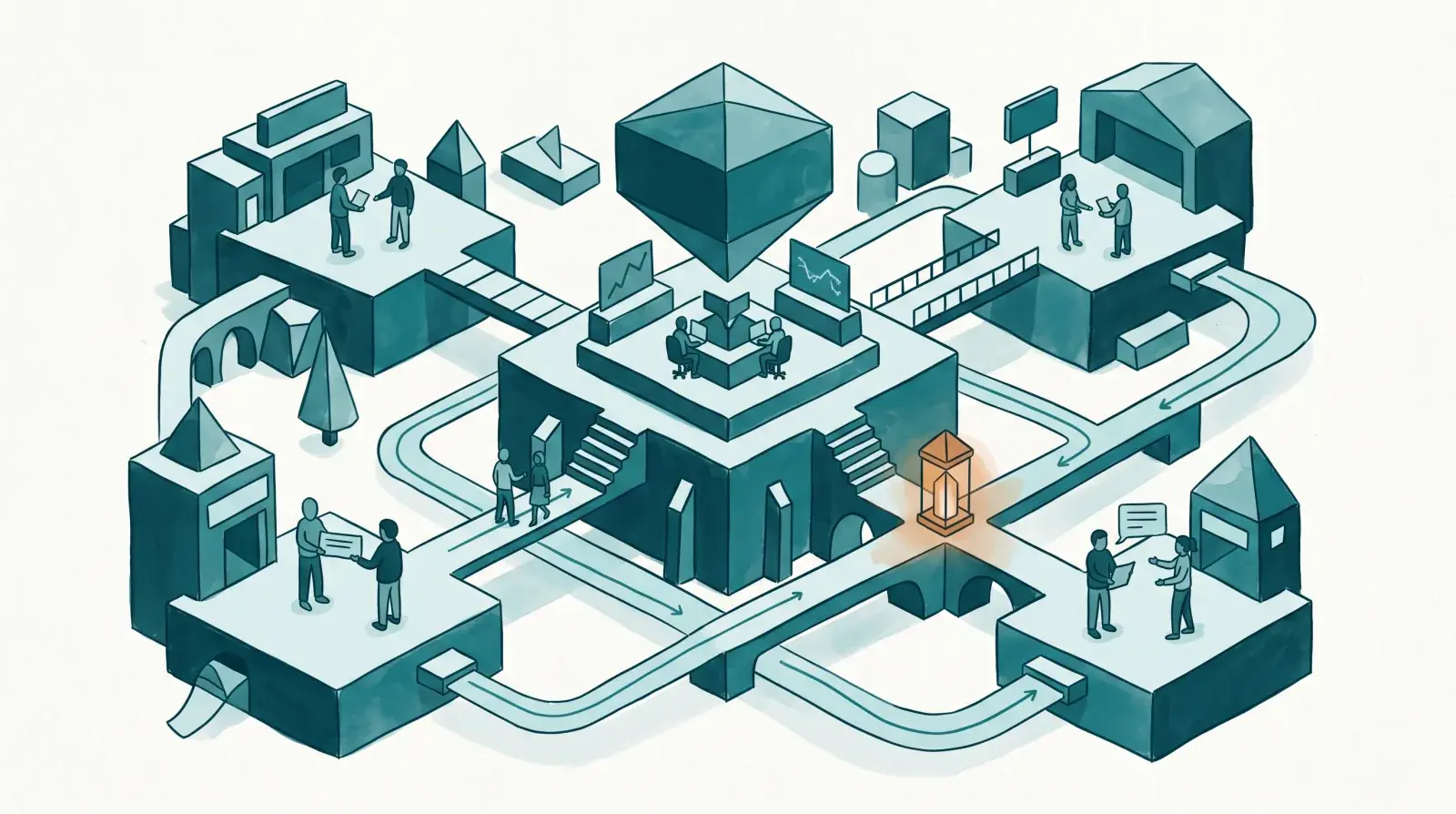
Binance launched in 2017 as a crypto-to-crypto exchange funded partly through the BNB token sale. Both products have changed substantially: Binance now operates a broad centralized trading platform whose services vary by jurisdiction, while BNB became the native gas and staking asset of BNB Chain.
2026 update: This page was originally a launch-era summary. For detailed current coverage, see our Binance exchange review and BNB guide. The original 2017 article is archived below; referral parameters, a malicious pharmacy link and a broken YouTube import were removed.
Binance exchange today
Binance.com is a custodial centralized exchange. Depending on the user’s location and eligibility, it may provide spot trading and other products, but availability, supported assets, fiat rails, leverage and promotions can differ materially. Binance.US and other locally operated platforms should not be assumed to have the same order books, products, terms or legal entity as Binance.com.
Identity verification is now part of normal access. Users should consult the platform’s current terms and eligibility screen rather than relying on a country list in an old review or trying to bypass a restriction.
Richard Teng is Binance’s CEO in 2026. The Changpeng Zhao interview preserved below remains historically useful, but its description of Zhao as the current CEO is no longer accurate.
What changed from the 2017 article?
| 2017 description | Current context |
|---|---|
| Crypto-to-crypto exchange aimed at an international audience | A multi-product custodial platform with services that vary by jurisdiction |
| 0.1% trading fee and a 50% BNB discount | Fees vary by product, pair, maker/taker status, VIP tier and current BNB discount; the 50% launch discount is obsolete |
| Four listed interface languages | The historical language list is no longer useful for evaluating availability |
| NEO GAS distribution as a differentiator | A launch-era promotion, not a reason to choose the platform today |
| BNB would someday power a decentralized exchange | BNB is now used for gas and proof-of-staked-authority participation on BNB Smart Chain; the old Beacon Chain was retired |
| Changpeng Zhao as CEO | Richard Teng is the current CEO |
Binance fees in 2026
Binance uses maker/taker pricing. The exact commission depends on the market, trading pair, user’s VIP level, rolling volume, BNB holdings and whether BNB is enabled for fee payment. Binance’s own current fee explainer uses 0.1% as a spot taker example, but that should not be read as a permanent universal rate.
Check the signed-in fee page and the order preview immediately before trading. Also account for spreads, funding payments, borrowing interest, withdrawal fees and network fees, which are different from the trading commission.
Binance and BNB Chain are different things
Binance exchange is a company-operated custodial platform. BNB Chain is a public blockchain network, and BNB is its native asset. Holding BNB in a self-custody wallet does not create a claim on Binance exchange, and using BNB Chain does not require depositing funds with Binance.com.
BNB began as an ERC-20 token used for exchange discounts. It later migrated to Binance’s own networks. The BNB Beacon Chain was shut down through the BNB Chain Fusion process in 2024; BNB Smart Chain now handles the main execution and staking functions. The separate BNB guide covers current burns, staking and network risks.
Custody, proof of reserves and account risk
Assets left on Binance are under exchange custody. Users can face account restrictions, operational incidents, phishing, credential theft, insolvency risk or delayed withdrawals. Security measures such as passkeys or hardware-key two-factor authentication, an anti-phishing code, withdrawal-address allowlisting and unique credentials reduce some risks but do not make custody risk disappear.
Binance publishes a proof-of-reserves system that lets users verify inclusion of account balances using Merkle-tree and zero-knowledge proofs. This is useful transparency, but even Binance’s proof-of-reserves explainer notes that PoR is a point-in-time view and may not show every off-chain liability. It is not the same as a complete financial-statement audit or a guarantee of solvency.
Before opening or funding an account
- Confirm the exact Binance entity and products legally available where you live.
- Read the current spot, margin, derivatives, deposit and withdrawal fee schedules.
- Test withdrawals with a small amount and verify the network and address format.
- Enable strong two-factor authentication and never follow an unsolicited “support” link.
- Keep only funds needed for trading on a custodial exchange if self-custody is appropriate for your skills and circumstances.
- Treat bonus, staking and yield rates as variable offers with separate terms and risks.
Original 2017 article (historical archive)
The text below is retained substantially as originally published. Product, fee, leadership, language, listing and NEO GAS claims describe 2017 and are not current guidance.
Binance is a crypto-crypto exchange with a focus on the international market and rapid development. Binance has grown tremendously over the past few months, especially with its early adoption over various coins and the large trade volumes for other popular coins. Currently, it supports English and Chinese users and there is a possibility to expand to Korean and Japanese in the future. Binance has recently expanded operations with various regional development teams around the world.
The Binance token (BNB) was created during the ICO event to fund the development of the Binance exchange.
Features of Binance
- High performance – capable of processing 1.4 mil orders/second
- Multi-language support – Chinese, English, Korean, Japanese
- Good support team – Binance support is reachable (rare in crypto space)
- All major coins available – BTC, ETH, LTC, BNB etc.
- Low trading fee – Only 0.1% trading fee
- Early support for Bitcoin Forks – Bitcoin Gold, Bitcoin Diamond were all listed on Binance
- GAS distribution for NEO – storing NEO on binance yields GAS too!
Partnerships with Other Chinese Coins and ICOS:
One of the advisors for Binanace is Da Hong Fei – The founder of NEO. This means that there is a strong partnership between Bianace and NEO. Currently, Bianace is the only exchange that gives NEO GAS for holding NEO on the exchange. The exchange takes a snapshot of the NEO balance on a daily basis and will distribute NEO GAS based on the snap shotted balance.
Interview with the CEO of Binance, Changpeng Zhao
I had the privilege of interviewing the CEO of Binance, ChangPeng Zhao. Binance is taking the cryptocurrenc exchange scene by storm with a massively positive response from both the Chinese and International community.
Binance ICO:
The Binance Exchanged was financed through an ICO that was held on the 14th of July 2017. A total of 15 Million USD dollars were raised during the event. Here are achieves for the Whitepaper and the ICO page.
Binance Token:
Binance tokens were issued to project supporters. The token has 3 major features:
- Exchange Fees: Binance tokens can be used to reduce fees for trade costs and commissions. Currently, Binance has a 0.1% trade fee and 50% of the fee can be paid in terms of Binance tokens.
- GAS: Binance will eventually feature advanced features that require GAS. BNB tokens can be used as GAS to power these advanced features.
- Staking: Binance eventual want to develop a decentralized exchanged. The BNB tokens will eventually be used on this exchange to stake transactions.
Disclaimer: Cryptocurrency trading involves significant risks and may result in the loss of your capital. You should carefully consider whether trading cryptocurrencies is right for you in light of your financial condition and ability to bear financial risks. Cryptocurrency prices are highly volatile and can fluctuate widely in a short period of time. As such, trading cryptocurrencies may not be suitable for everyone. Additionally, storing cryptocurrencies on a centralized exchange carries inherent risks, including the potential for loss due to hacking, exchange collapse, or other security breaches. We strongly advise that you seek independent professional advice before engaging in any cryptocurrency trading activities and carefully consider the security measures in place when choosing or storing your cryptocurrencies on a cryptocurrency exchange.
Frequently asked questions
What is Binance?
Binance.com is a centralized cryptocurrency exchange. It holds customer assets in custody and offers products that vary according to account eligibility and jurisdiction.
Is Binance the same as BNB Chain?
No. Binance is a company-operated exchange; BNB Chain is a public blockchain network. BNB is used on BNB Chain and within some Binance products, but the exchange and network are not the same thing.
Who is the CEO of Binance?
Richard Teng is Binance's CEO in 2026. Changpeng Zhao, interviewed in the original 2017 article, is the company's former CEO.
What are Binance spot trading fees?
There is no single rate for every user and pair. Fees can depend on maker or taker status, VIP level, volume, BNB holdings, pair-specific promotions and whether BNB fee payment is enabled.
Does paying fees with BNB give a 50% discount?
The 50% figure was a launch-era discount and is obsolete. Users should check the current fee schedule because discount percentages and eligibility can change.
Does Binance require identity verification?
Identity verification is part of normal access to Binance services. Required information, limits and available products can differ by jurisdiction and account risk review.
Can residents of every country use Binance?
No. Access and product availability depend on location and local rules. Users should check the current Binance terms for their exact entity and must not use tools intended to evade geographic restrictions.
What does Binance proof of reserves prove?
It helps a user verify that selected account balances were included and backed by reported reserves at a snapshot. It is not a complete audit of every corporate liability or a guarantee against insolvency.
Is it safe to leave crypto on Binance?
Any centralized exchange introduces custody and counterparty risk. Strong account security reduces credential theft, but users can still face restrictions, operational failures or loss of access.
Where can I read the current BNB token guide?
Boxmining's separate BNB guide covers BNB Smart Chain gas, staking, token burns, the retired Beacon Chain and current token risks in more detail.
Sources and further reading
Share
Found this useful?
Share it with someone who'd want to read it.
Related
What Is BNB? BNB Chain Uses, Burns, Staking and Risks
BNB is the native coin of BNB Smart Chain, opBNB and Greenfield. Learn its history, gas and staking uses, burn mechanics and major risks.
BNB Chain Guide: BSC, Beacon Chain Shutdown and BEP-2 Recovery
What happened to the original Binance Chain and DEX, how BNB Smart Chain works now, and what legacy BEP-2 holders need to know about recovery.
What Happened to Harmony ONE? Inside the 4 Billion Token Exploit
Harmony patched a cross-shard replay flaw after roughly 4 billion ONE appeared without authorization. The incident follows years of bridge losses, token inflation and failed recovery.